- Start with a myth. Bust a common misconception in your industry to establish authority and create a problem only you can solve.
- Sell an experience. What story, identity, or adventure are you offering beyond the physical product?
- Handle every objection. Use your creative to systematically dismantle the reasons customers might say no.
- Reframe the price. Don’t just show the cost; anchor it against a more expensive alternative or a mission-driven benefit.
- Build a psychological ladder. Evolve your customer’s identity from a simple problem-solver to a long-term brand advocate.
Deconstructing the Atlas Coffee Club Playbook: How They Sell $29 Coffee Subscriptions Like Crazy
If you’re a coffee drinker, you’ve probably seen ads for Atlas Coffee Club.
They’ve achieved something most D2C brands only dream of: convincing thousands of people to sign up for a premium coffee subscription in a market absolutely dominated by convenience and low-cost options.
This isn’t just about pretty packaging or a clever discount. It’s a ruthlessly efficient marketing system designed to break down objections, build a powerful brand narrative, and maximize lifetime value.
We tore down their entire strategy—from their top-performing ads to their funnel psychology—to see how their engine works.
Here’s the playbook.
Pillar 1: The Myth-Busting Hook That Starts the Conversation
Atlas doesn’t open with a sales pitch. They start by telling you that everything you know about coffee is wrong.
Their most successful creative angle is pure myth-busting, and the hook is simple and brilliant: “There’s no such thing as an espresso bean.”
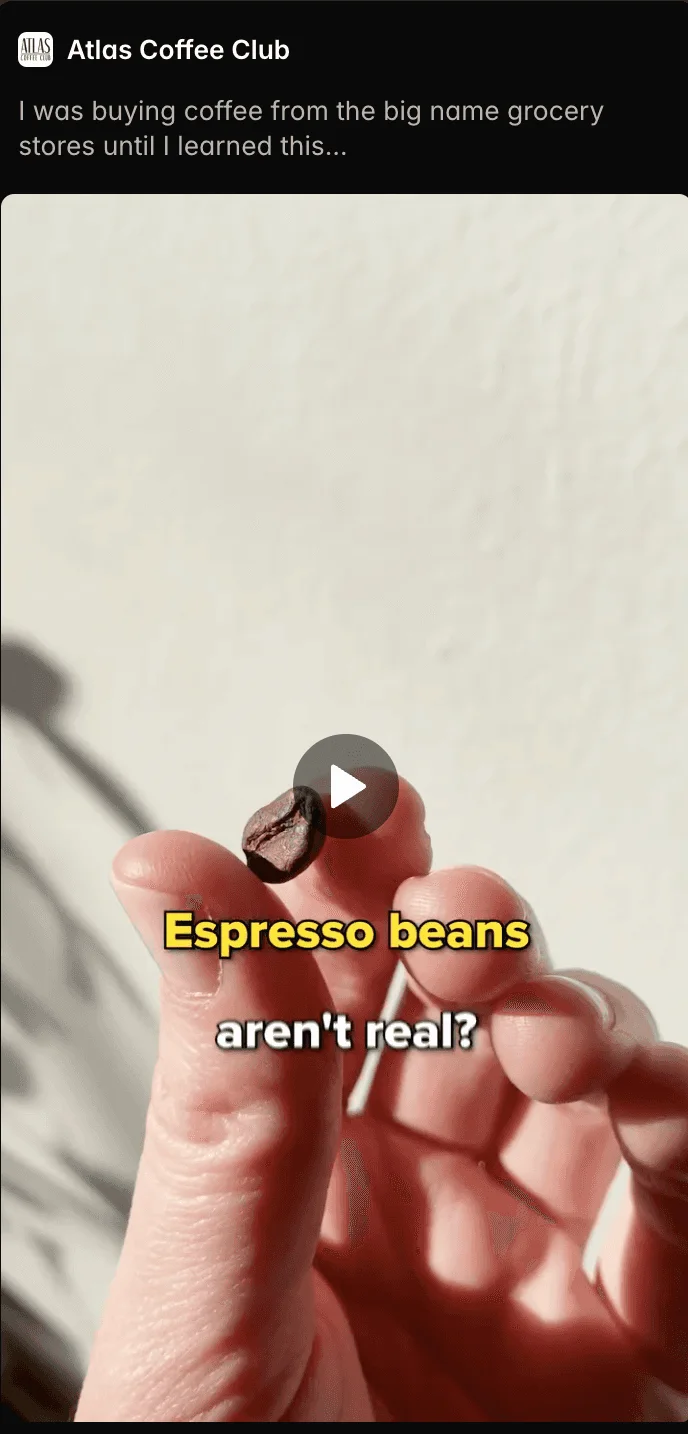
This immediately does three things:
- It stops the scroll. It’s a pattern interrupt that makes you question a core belief.
- It establishes authority. They aren’t just selling coffee; they’re educating you.
- It creates the problem. By exposing a common myth, they subtly frame "Big Coffee" as an industry that isn't telling you the whole truth.
This angle is their top-of-funnel machine. They use it to talk about freshness, why most store-bought coffee is stale, and why that "extra bold" supermarket bag is probably just burnt. It’s a genius way to introduce a problem that only they can solve.
Pillar 2: Selling a "World Tour," Not Just Coffee Beans
Once they’ve established that your current coffee is flawed, they introduce their solution. But they aren't just selling "better coffee."
They’re selling an adventure. The entire brand is built around the "World Tour" concept. You’re not just a subscriber; you’re an explorer.
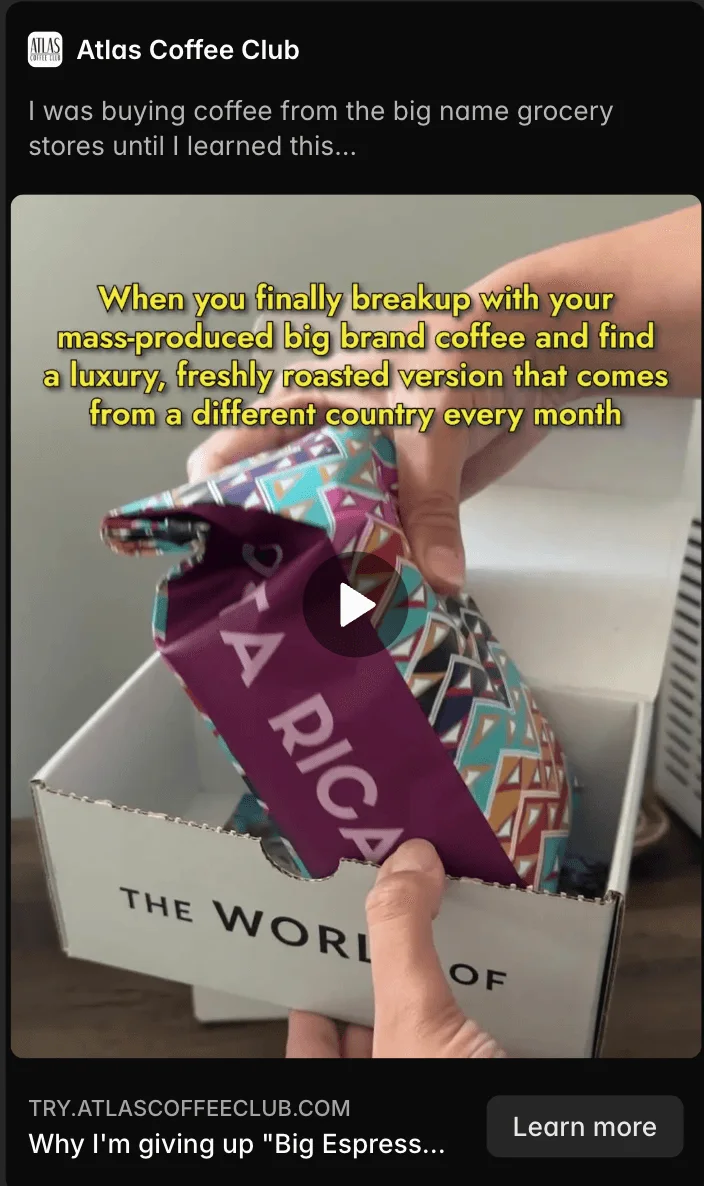
- The Experience: Every month, you get coffee from a new country—Ethiopia, Peru, Costa Rica.
- The Story: Each box comes with a postcard detailing the coffee’s origin and tasting notes.
- The Collectible: The colorful, unique bags create a "collector's mindset." You don't just drink the coffee; you experience and collect the journey.
This narrative transforms a simple commodity into a monthly discovery experience. It’s the core of their brand equity and the reason customers stick around long-term.
Pillar 3: The Pod-Lover’s Trojan Horse
Atlas knew they couldn’t ignore the massive Keurig and Nespresso market. But pod coffee has a terrible reputation: it’s seen as stale, watery, and bad for the environment.
Instead of trying to convince people to ditch their machines, they offered an upgrade.
Their messaging is direct: “Upgrade your coffee, not your machine.”
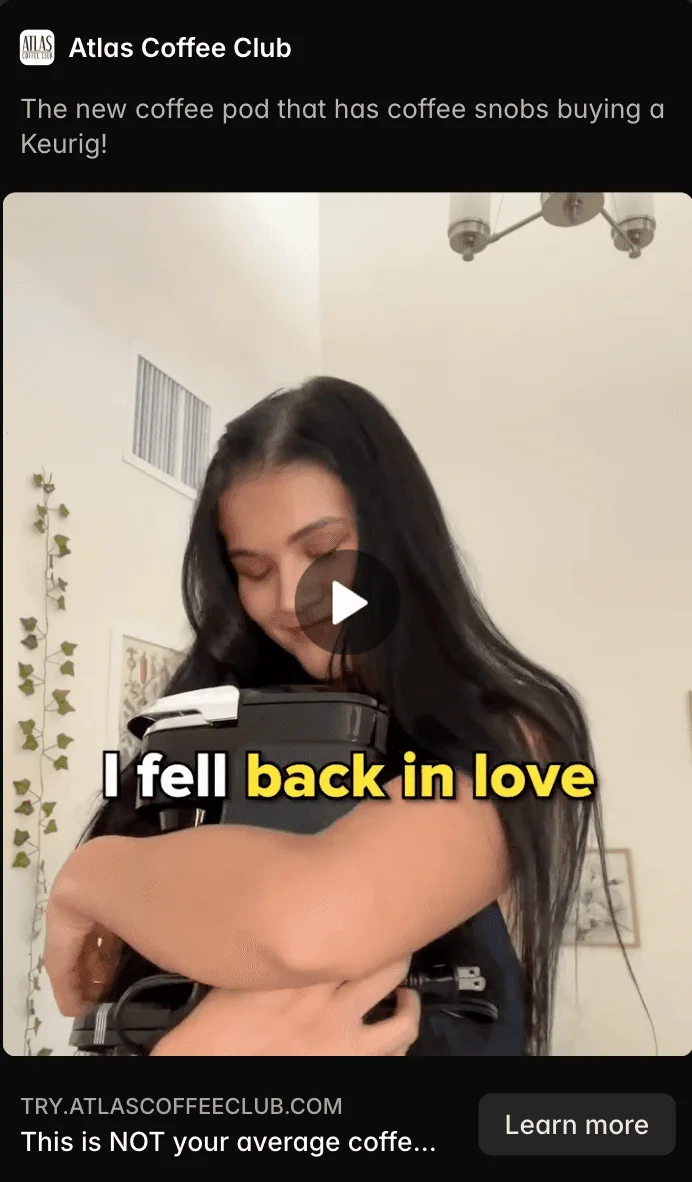
This is their Trojan Horse to capture the convenience-first customer. They handle every objection head-on:
- Quality: They show their pods contain specialty-grade, freshly-roasted beans.
- Value: They highlight that their pods have 20% more coffee than standard K-Cups.
- Planet: They make sure to mention the pods are recyclable.
By positioning their pods as a high-end, guilt-free alternative, they tap into a huge market segment without diluting their core brand promise.
Pillar 4: Justifying the Price with Math and Mission
Let's be real: $29 for a bag of coffee feels expensive. Atlas knows this is their biggest hurdle.
They tackle this objection using two brilliant tactics, often in the same ad:
- Cost-Per-Cup Math: They break down the subscription to a simple, digestible number. Suddenly, it’s not a $29 purchase; it’s “65¢ a cup—cheaper than Starbucks.” This reframes the value instantly.
- The Ethical High Ground: They layer in the message that paying a premium means supporting farmers directly. Their ads feature farmer portraits and text overlays about funding clean water and schools. This isn't just coffee; it's an ethical investment.
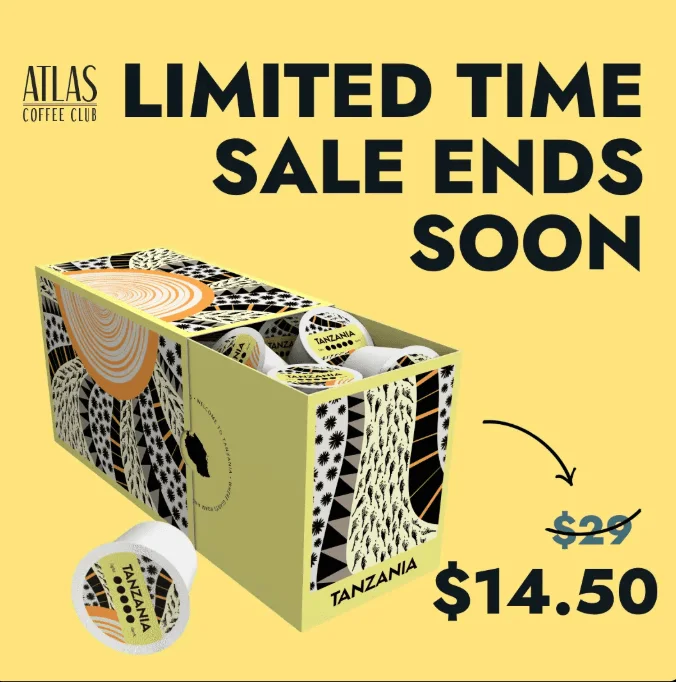
By sandwiching cost-per-cup logic with a feel-good mission, they neutralize both price and ethical objections in under ten seconds.
Final Thoughts on The Atlas Playbook
Atlas Coffee Club’s success isn't an accident. It's a system built on sharp, repeatable marketing principles.
- Start with a Myth. Bust a common misconception in your industry to establish authority and create a problem only you can solve.
- Sell an Experience. What story, identity, or adventure are you offering beyond the physical product?
- Handle Every Objection. Use your creative to systematically dismantle the reasons customers might say no.
- Reframe the Price. Don’t just show the cost; anchor it against a more expensive alternative or a mission-driven benefit.
- Build a Psychological Ladder. Think about how you can evolve your customer’s identity from a simple problem-solver to a long-term brand advocate.
Steal these pillars, and you’ll be well on your way to building a brand that doesn't just sell—it resonates.
Questions
What hook does Atlas Coffee Club use in its ads?
A myth-busting one: "There's no such thing as an espresso bean." It stops the scroll, positions Atlas as the educator, and frames mass-market coffee as the problem only they can solve.
How does Atlas justify a $29 coffee subscription?
With cost-per-cup math, about 65 cents a cup and cheaper than Starbucks, layered with the mission of paying farmers directly, funding clean water and schools.
What is the Atlas Coffee Club World Tour?
The brand narrative: coffee from a new country every month, a postcard with the origin story and tasting notes, and collectible bags that turn a commodity into a monthly discovery.
How does Atlas sell to Keurig and Nespresso users?
With the line "Upgrade your coffee, not your machine": specialty-grade freshly roasted beans in pods with 20% more coffee than standard K-Cups, and recyclable.